


A Morning at Shantivanam

Stepping through the narrow lane toward Shantivanam, the first thing that caught our eye was a small kottiyambalam—a humble shelter with a cob wall that shimmered softly in the morning light. Embedded within it were glass bottles, glowing in shades of green and amber, quietly announcing that this home belonged to another rhythm of living.
Shantivanam is the life-work of Ms. Preetha Rajan, who spent 25 years collecting ideas, sketches, inspirations, and discarded materials for a home she hadn’t yet built. The moment arrived when clarity, resources, and readiness finally met. The land, roughly 30 cents gifted by her grandmother, held both ancestral memory and the promise of a gentler future.
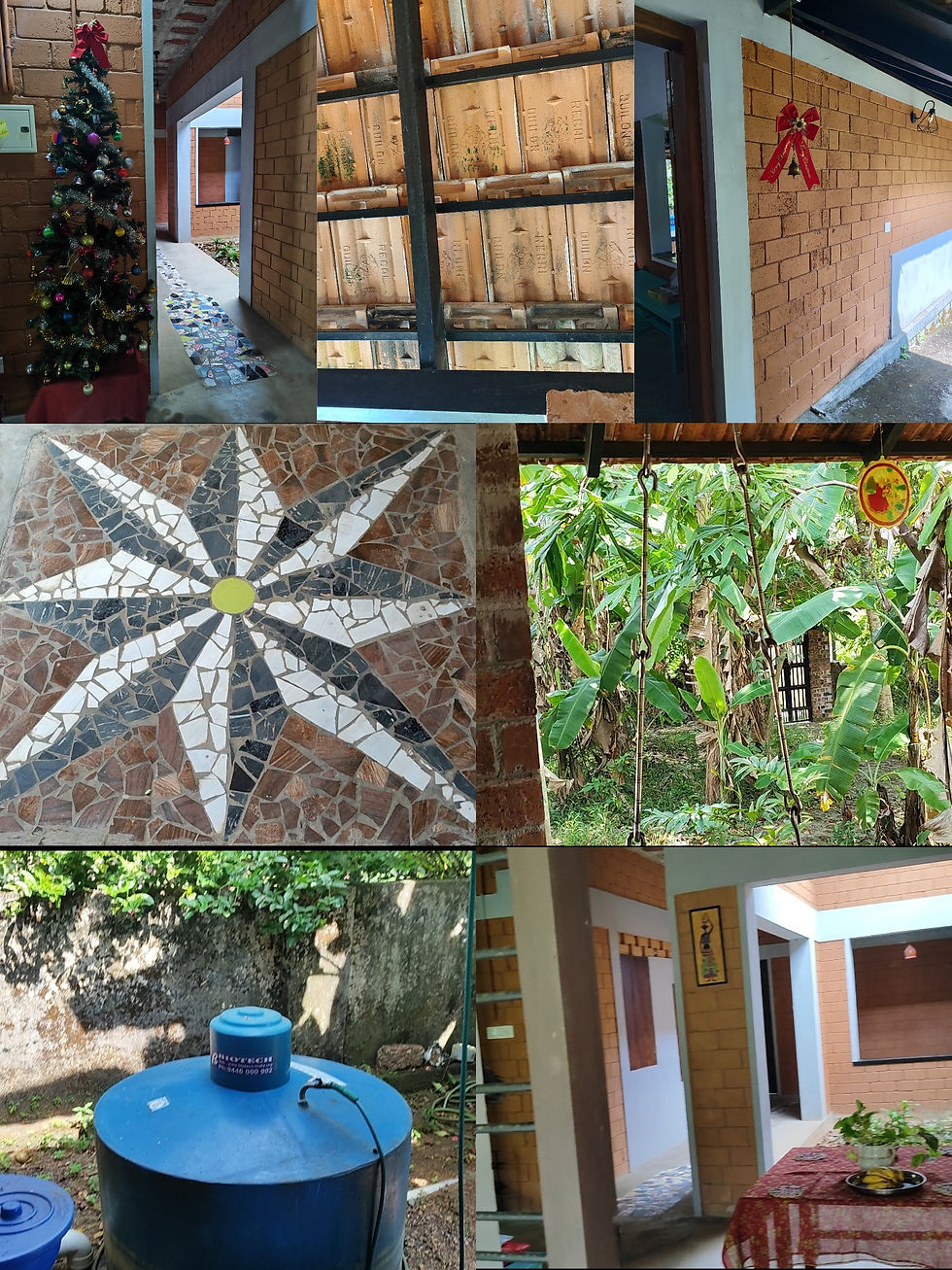
Inside the home, courtyards, corridors, and open spaces unfold naturally, designed more for gathering and community than for enclosure. Only two rooms - the bedrooms - are kept private; everything else invites conversation, sunlight, and shared stillness.
The house is built with compressed mud blocks and cob structures, crafted by Preetha and a circle of friends who came together for two weeks to shape walls, benches, and even a cob bed. They were guided by skilled labourers for whom such the whole ideology was a novelty.
Throughout the space, what stands out is the story of materials:
Old doors and windows salvaged from a demolished home
A pathayam repurposed into shelves, an aattukattil (hanging cot) and a dining table,
Terracotta tiles from yet another demolished site
Vibrant broken tile mosaics that turn waste into colourful pathways
Glass bottles inserted into the cob that let in green and amber shaded light
In one corner sits an underground refrigerator - a simple large earthen pot sunk into cool soil. Nearby, citrus peels ferment quietly in a jar, becoming Preetha’s homemade cleaning enzyme. A biogas plant sit outside the kitchen verandah, and a grey-water system ensures that every drop circulates purposefully. Nothing in this house is hurried, everything is thoughtfully looped back into the earth. Even the overgrown banana leaves on the pathway seemed to be inviting a playfulness as we parted them to step forward.
Around the home, nature is given space to wander: a rewilding corner, a young butterfly garden, and the first saplings of a food forest. The house is not just lived in it is continually growing and stands as a eco-balanced space for vegan gatherings, nature enthusiasts and initiates like us. We gladly accepted her invitation to help decorate Shantivanam for Christmas and New Year!
What stayed with us most was the feeling of awe and gentle grounding. The ease of sunlight falling through glass bottles, the earth beneath our feet, and the quiet confidence of a home built from reuse, community, and long-held intention. Shantivanam stands as a simple, powerful reminder that sustainability can be a practice, shaped one choice at a time.
We visited Shantivanam as part of our Learning and Research towards the fulfilment of Srishti Bhoomi.

Comments